
Stonington Then and Now
With research by Claude via Perplexity
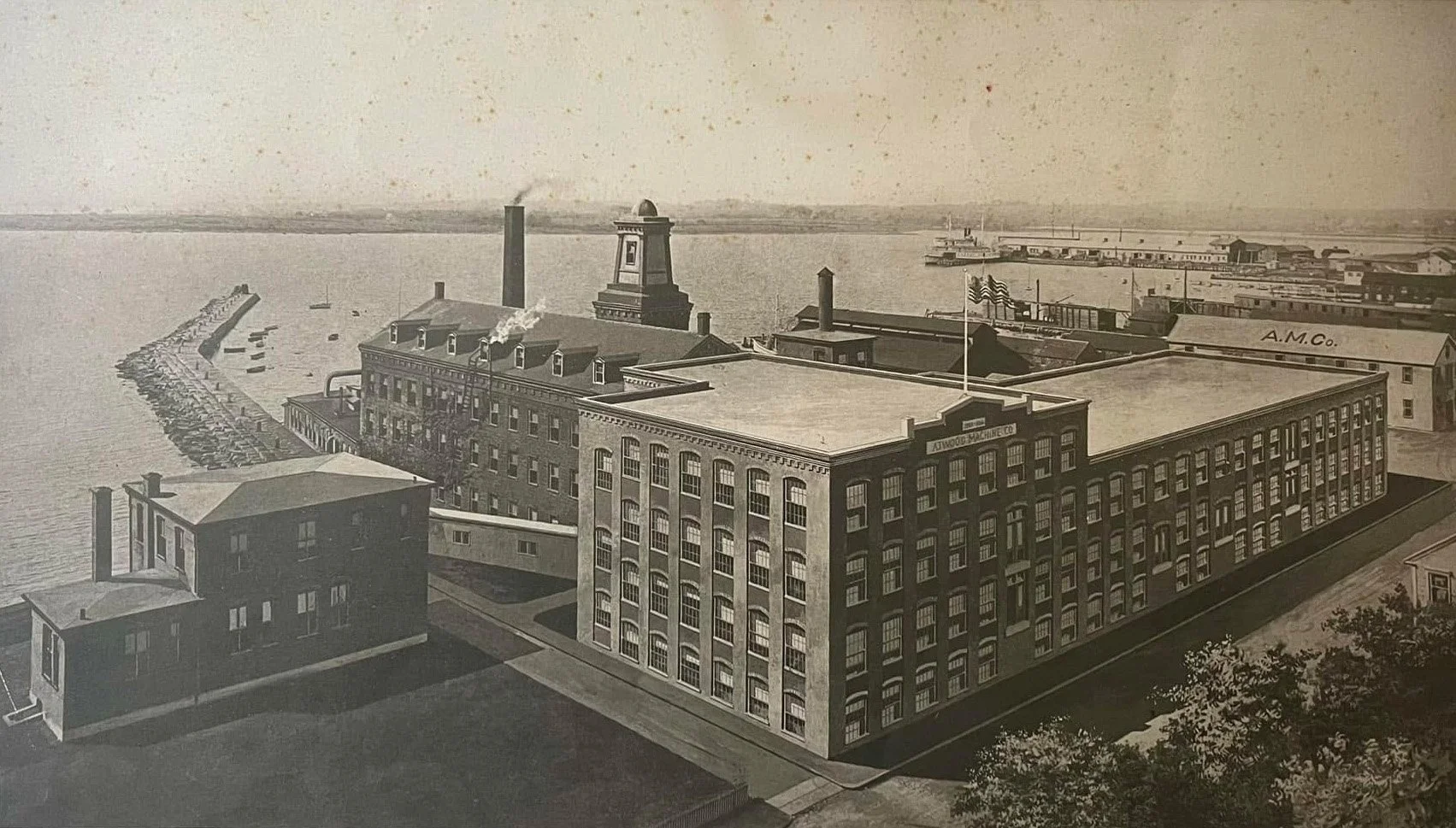
Atwood Machine Company circa 1876
Stonington has contributed a remarkable mix of maritime business ventures, transportation and industrial technology, and distinctive cultural institutions and traditions since the mid‑18th century.[en.wikipedia]
Maritime and business developments
By the late 18th century Stonington (then Long Point) had become a regional center for fishing, shipbuilding, whaling, and sealing, anchoring much of the town’s early commercial life.[connecticuthistory]
Local captains like Edmund Fanning and Nathaniel Palmer turned Stonington into a base for global sealing and trading voyages, discovering Pacific islands and reaching Antarctica, which expanded American maritime commerce and geographic knowledge.[americanheritage]
Through the 19th and early 20th centuries the borough maintained the state’s only commercial fishing fleet, sustaining a working waterfront economy even as other New England ports shifted away from small-scale commercial fishing.[connecticuthistory]
Transportation and industrial technology
In 1837 Stonington gained a key role in regional transportation through the Providence and Stonington Railroad (“Stonington Line”) and steamship service between Boston and New York, creating an early multimodal rail–steamship corridor that boosted trade and travel along the Northeast coast.[en.wikipedia]
The town developed an industrial base with factories such as a horseshoe nail works opened by John F. Trumbull in 1851, which contributed to advances in manufactured hardware during the railroad and horse‑powered transport era.[connecticuthistory]
In the 1890s the American Velvet Company established a major textile operation in Stonington, reflecting and contributing to late‑19th‑century innovations in mechanized fabric production and industrial organization until it closed in 1998.[connecticuthistory]
Cultural institutions and preservation
The borough secured an incorporated municipal charter in 1801, becoming the second chartered borough in Connecticut and shaping a distinctive local self‑governing tradition that continues to influence civic culture.[connecticuthistory]
Stonington residents famously organized to repel British naval attacks in both the Revolutionary War and the War of 1812, a story that has become central to local identity and is preserved through monuments, commemorations, and historical narratives.[americanheritage]
Historic Stonington and related organizations now maintain museums, programs, and archives focused on the town’s seafaring and Revolutionary heritage, supporting ongoing public history work and community education.[historicstonington]
Contemporary cultural and creative economy
Over the last several decades the former industrial velvet mill has been repurposed into a mixed‑use complex that houses entrepreneurs, arts and crafts businesses, and health services, illustrating a modern transition from heavy industry to creative and service‑oriented enterprises.[connecticuthistory]
Today the borough’s economy blends tourism, art, and heritage: there are galleries, studios, antique shops, restaurants, and niche makers (including a harpsichord factory and pottery maker) that contribute specialized craftsmanship and cultural production.[kupi]
Stonington participates actively in America 250 commemorations, organizing town‑wide scavenger hunts, heritage events, and public programs that highlight its historical role and foster contemporary cultural engagement.[thewesterlysun]
Foodways and community traditions
Stonington’s long history as a fishing port has shaped local seafood traditions and small‑scale commercial fleets that influence regional culinary culture today.[americanheritage]
Seasonal events such as Fourth of July parades, village fairs, and waterfront celebrations are now organized by civic groups like the Stonington Village Improvement Association and Historic Stonington, reinforcing a community‑driven culture of public gathering.[historicstonington]